“This is my desk. Under the window is a children’s playground.”
For our poetry making series, we ask the poet and translator to dissect the poetry they have published on our page. “Post” Yongyu Chen appeared in our new summer edition, no. 252.
How does this poem start for you? Is that with pictures, ideas, phrases, or something else?
I started this poem at the end of September in Cambridge, Massachusetts. I returned from a long journey in Asia and woke up early because of time differences. I feel good! I wrote a lot.
I wrote the first draft after a sequence of experience that had felt like an experience when I was in it – starting with a meeting, for the first time, a close friend of a friend and ended up walking home on a gray day, after it rained, seeing branches of oak wood on the ground.
It feels like a feeling of wanting to take pieces of oak wood – and pay attention, then make myself do it – give something to the previous experience. When I came home, I started writing the poem.
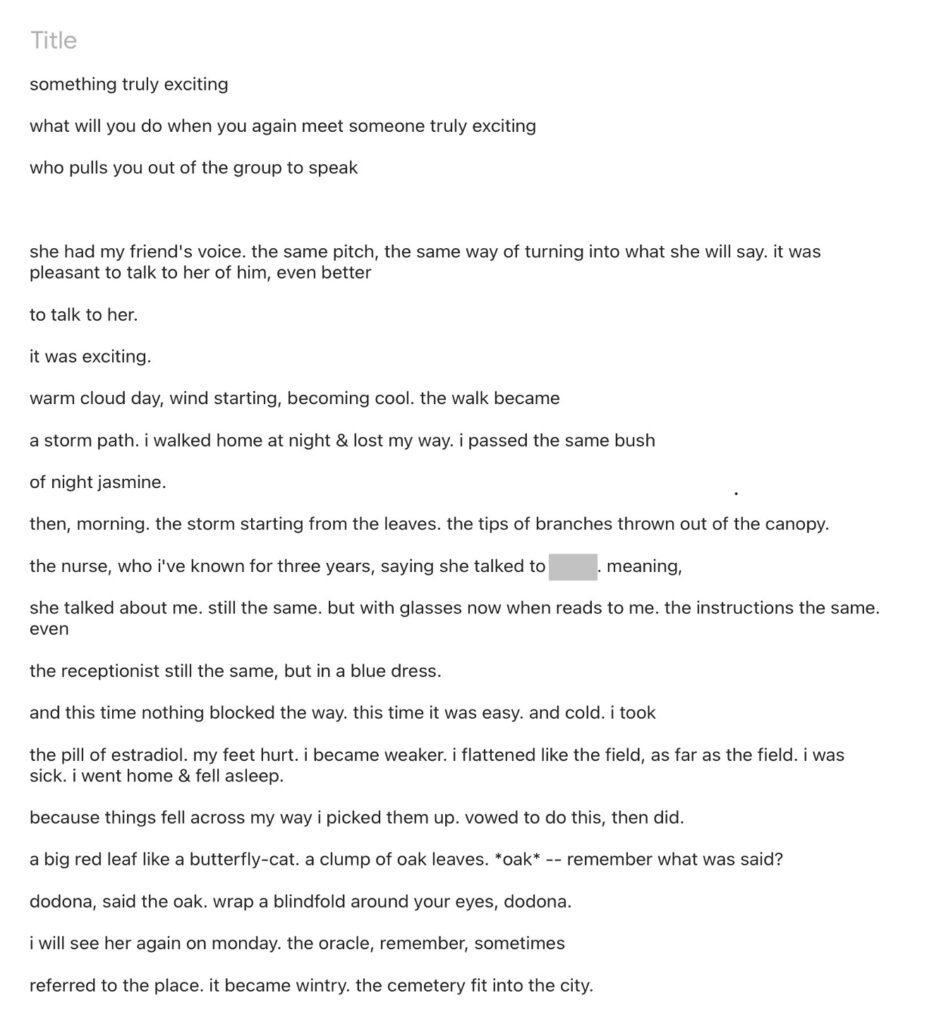
What about the second draft? The third? How many drafts are there, and what are the main differences between them?
There is one draft that continues to grow, which becomes shorter. More than two months, I also started a new poem, and some layered into this one.
I went to the Claire Rousay concert – it reminded me of the Ichiko Aoba concert that I didn’t visit. The title of one of Aoba’s songs, “Imperial Smoke Town,” became a scene with ironism and feathers and the front post …
I saw my friend, and we sat on the stairs – there were no chairs in the cafe. People walk between us, up and down. We read poetry by pit with …
Höldderlin is the last addition, suddenly the poem. I learned about the way through the mountains and pistols under the pillow in cold …
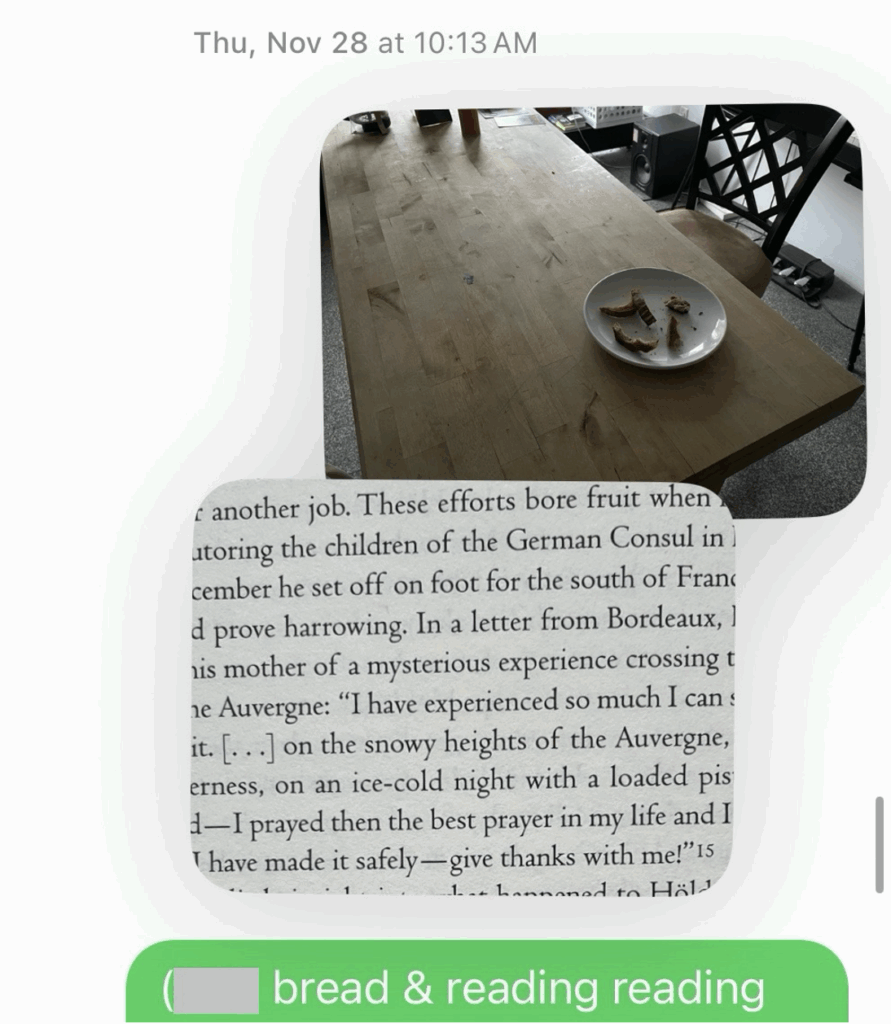
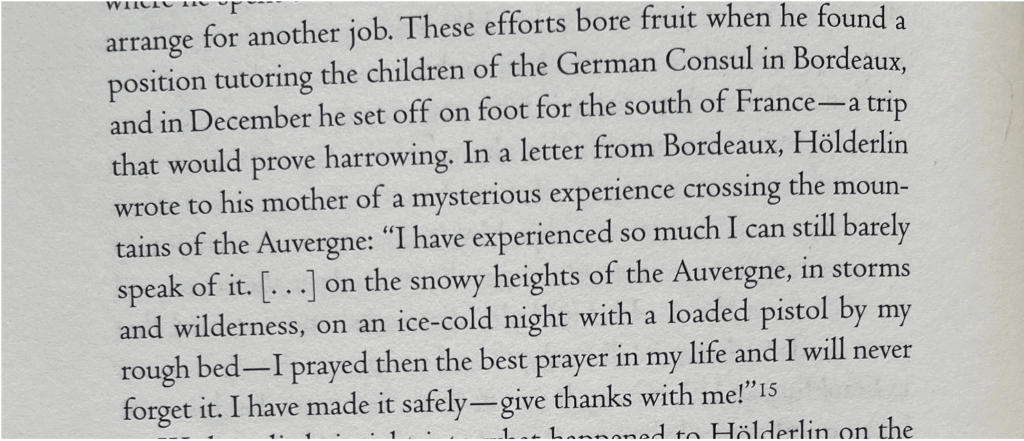
When editing, the word free becomes important. I write a lot, and freedom is what it feels like writing to me. I read Alice Notley, who freed me to write about more things I noticed. I think that there is something that is photography about this loose, which for me means to write, only write what happens, and knowing many things will not succeed and that what is successful will not succeed not because of techniques, but through a collection of real things that are indexed in the poem.
Photographer Moyra Davey once wrote that “Accident is the blood of photography life.” And “My ratio today may be one of the frames that can be used for every five or ten film scrolls.” In the same text, he quoted Garry Winogrand – “That is a true photography – truly – photography – like – in the simplest sentence, I photographed to find out what something would be photographed.”
When do you know this poem is finished? Are you right about that? Is it finished, after all?
When I put Höldderlin, the poem felt finished because doing that felt … like that breaking the rules, or the pattern in. He is very historical, can be understood real and concrete. The texture completes poetry for me.
The last edit set is carried out with Paris review Chicu Reddy’s Suggestion Poetry Editor, which tightened the poem. Some of these edits change or turn the meaning— “no longer remember” to “remember.” Others remove objects that I can’t imagine, like the hands at the end, in the thighs. I admire the edited because I can’t make it, from the logic of making poetry. They work on the poem and let the meaning change, if necessary. Or maybe the meaning itself needs to be developed so that the poem works, better. This editing is easily accepted because it is sharp, difficult, and not me.
Is there a hard and easy poem?
Yes. This one is easy.
Yongyu ChenThe first poetry book, the winner of the 2023 Nightboat poetry prize, will come from the Nightboat in Spring 2026.
News
Berita
News Flash
Blog
Technology
Sports
Sport
Football
Tips
Finance
Berita Terkini
Berita Terbaru
Berita Kekinian
News
Berita Terkini
Olahraga
Pasang Internet Myrepublic
Jasa Import China
Jasa Import Door to Door
Originally posted 2025-09-07 07:11:03.