Every month, we combed dozens of books that will soon be published, for ideas and good writing for Review ‘S site. Often we are shocked by certain paragraphs or sentences from the gallai that piled up on our table and spilled on our shelf. We sometimes share it with each other on Slack, and we think, for change, that we can share it with you. These are some of the things we found this month.
—Sophie Haigiey, Web Editor, and Olivia Kan-Sperling, Assistant Editor
From Nora Claire Miller Food material (Fonograph Edition), Book Long Poetry:
I handed over to the teller, an imperfect amount after an imperfect amount. This is not money but they can approach. Form, we call it, because there is no living thing that becomes ▯ ▯ lined up. We call something good when we don’t want to make comparisons. We call something that is burning when his arrogance cannot be explained. We call something impractical when we have the meaning we are not involved. We mention something surprising when floating in a thin air.
From the biography of Lance Richardson Nature True: Pilgrimage Peter Matthien (Pantheon):
Peter began to see a woman in Reno named Lisa Barclay Bigelow, a great beautiful person (she will be a model on her cover Mode And Harper’s Bazaar) Who is in Nevada to get his own divorce. Lisa lived in New York, and on November 19, Peter took her and her two children to the Coney Island Aquarium, which had just installed the Amazon river scene complete with Piranha and the tropical birds of life. Along the way, they all stopped at Pier B on Red Hook to check the MV We come, Who will soon transport Peter to the original Amazon. “I don’t think I have been all over the world,” Luke said after hearing the plan. Peter showed that his seven -year -old son remained a world traveler, after sailing from Italy at Andrea Doriawho is now at the bottom of Atlantic after drowning near Nantucket in 1956. Sara Carey, five years old, listening to this shocking news, then warns her father that he will also end up at the bottom of the ocean if he tries to travel the world, and sharks have “very sharp teeth.” He doesn’t believe he really goes to the MV We come. He could barely trust him himself, even though he did not show any signs. The next day at the dock, he said goodbye to Bill Styron, who came to offer him Bon Voyage. Styron was shocked by the balance of his friend: “His glasses are planted with scientific accuracy on his long face, he may not be further than the island of Staten, so does it appear, rather than it seems to be truly excess of forest in which God knows what is happening to the wild and dark animals that occur on his skin.”
From Claire-Louise Bennett’s novel Big kiss, bye-bye (Riverhead):
On the last night in the old place crossed my mind to write a few lines, but I was too tired and read most of the long movie reviews before turning on the lights for the last time in the room. It occurred to me that I would most likely eventually say things that are stale along the line of my life chapter will soon end and the next phase will definitely be the final phase, full of adventure and glory and ease of mind in the end, and so on, and so on. It is very difficult not to give up on such vapid nonsense when someone is on the verge of shifting to a new and unclear situation. On such a threshold, a person is vulnerable to feelings and expressing hopes for the future, which starts tomorrow, a new start, where I will do different things, with greater integrity and determination, and so on. I grabbed down and produced a lamp.
From the political philosopher Rahel Jaeggi Progress and regressionTranslated from Germany by Robert Savage (Harvard University Press):
Progress, we are accustomed to saying, is a change for the better, which means that regression will be a worse change. Although in a certain sense this is true, it is not entirely accurate. What is important, and what I will fight in this book, is that progress refers to the form of change, or rather, a certain way to respond to the crisis and solve problems. In short, progress is a process of learning experience that adds to solutions to problems that are systematically blocked in regression conditions.
Progress, as I will conceptualize throughout this study, has nothing to do with the WHIG Self-Aonfy history of the Western Imperialist society. Regression is also not a paternalistic decision on those who are considered to have been abandoned by Western modernity. Conversely, binary progress/regression is mainly a conceptual vehicle for criticism and self -criticism of people who are proud of their proper progress.
From the introduction of Vernon Lee to a collection of ghost stories, Ghost (Unnamed press), first published in 1890:
That is the past, the past that is more or less, where the prose is clean eliminated by the distance – it is a place to get our ghosts. Indeed we live alone, we educate modern people, on the border of the past, in homes that look down in the gardens’ gardens and the Greek courtyard; And the ghost legion, very vague and changing, continuing to and fro, taking and carrying for us between it and the present.
From Lord (NYRB Classics), a novel by Palestinian writer Anglophone Soraya Antonius, was originally published in 1986, where a British missionary told a story to the narrator, a journalist:
“I feel the horror, the scene, something between us like a wall. No, a gelatin as sold by wholesale traders, that’s all, something fragile and sharp but transparent where we each distort the other.”
Helps describe the type of sound that might be made by gelatin if it will be destroyed by a giant jelly maker, the recorder is turned off at the tip of the roll.
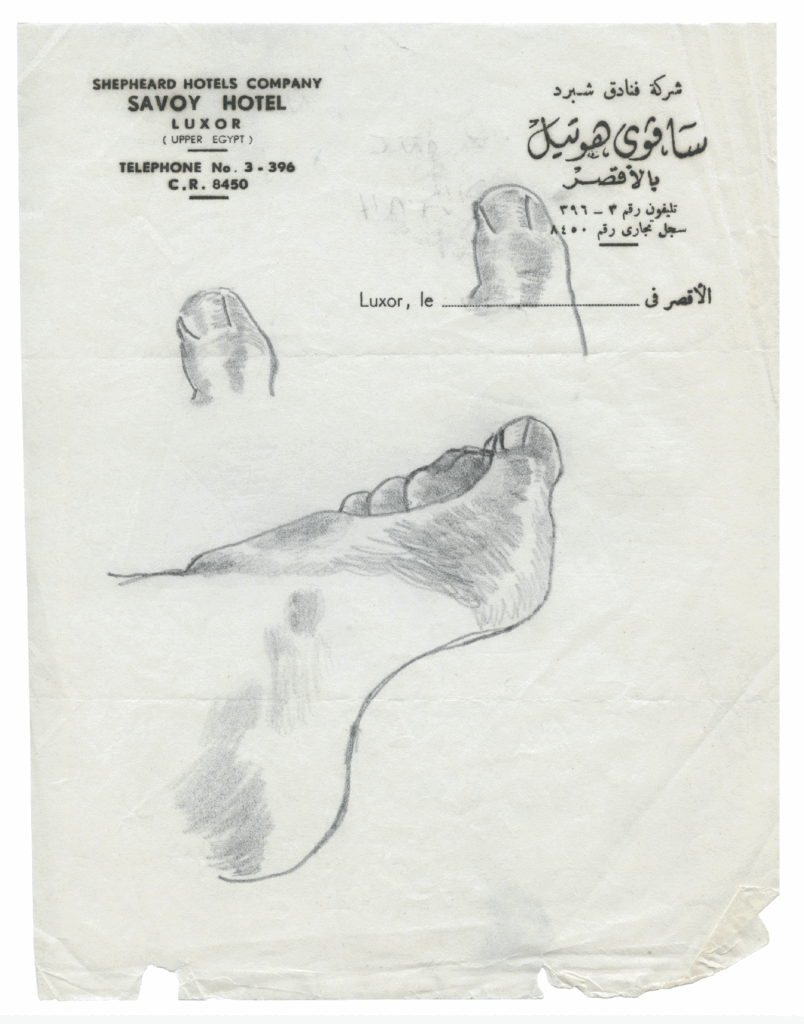
Picture by Paul Thek on Stay away from nothing (Main information), a collection of letters from Thek to Peter Hujar accompanied by photos of Hujar:
News
Berita
News Flash
Blog
Technology
Sports
Sport
Football
Tips
Finance
Berita Terkini
Berita Terbaru
Berita Kekinian
News
Berita Terkini
Olahraga
Pasang Internet Myrepublic
Jasa Import China
Jasa Import Door to Door
Originally posted 2025-10-03 10:23:59.